How long do elephants live?
Elephants can live into their sixties, and long-term field studies have followed wild African females to that age. A typical elephant does not get there, though: calf deaths, poaching, drought and conflict pull the average down. In captivity the picture is worse. A large 2008 analysis found that elephants in European zoos had a median lifespan of under 20 years, far shorter than protected wild or working elephants.
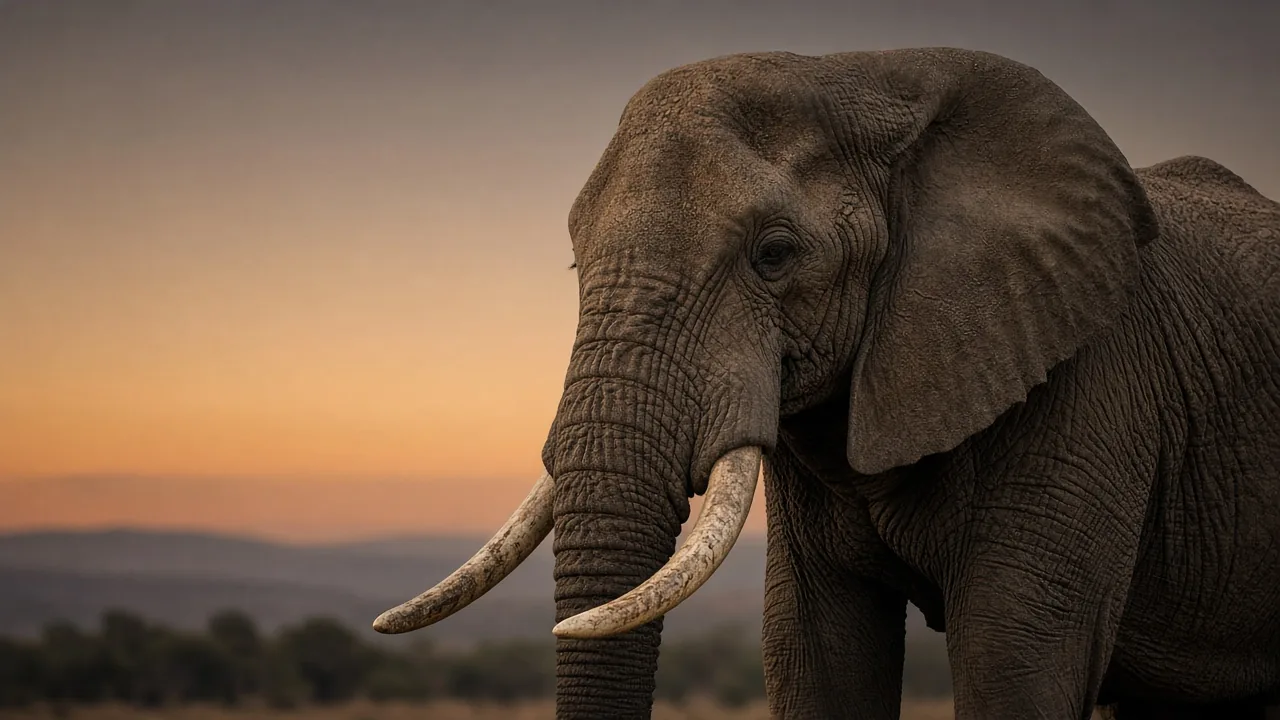
The short answer
An elephant that avoids early hazards can live into its sixties. That makes elephants some of the longest-lived land mammals on Earth. But "can live" and "usually lives" are different things: as our elephant FAQ notes, zoo organizations give median life expectancies closer to the high thirties and forties. Many calves die in their first years, and adults face poaching, drought, disease and conflict with people. The most useful numbers come from decades-long studies of known individuals, and they show a wide gap between protected wild populations and elephants kept in zoos.
What long-term studies of wild African elephants show
The Amboseli Elephant Research Project in southern Kenya has tracked individually known elephants since 1972, which is rare for any large mammal. In a 2001 paper in the Journal of Zoology, Cynthia Moss summarized the population's demography: births, deaths, age at first calving and survival across age classes. Because researchers knew the elephants personally, they could record real ages at death rather than estimating them from tooth wear.
A 2016 study by Phyllis Lee, Vicki Fishlock, Elizabeth Webber and Cynthia Moss in Behavioral Ecology and Sociobiology used the same records to ask what a long life is worth. They found that wild females kept breeding late into life with only modest reproductive decline, and that the females who lived longest produced the most calves over their lifetimes. Old matriarchs are not retired. They keep contributing calves and, as described on our behavior page, carry the social knowledge their families rely on. Slow breeding also explains why lifespan matters for conservation: with a pregnancy of nearly two years, each early death removes many potential future calves.
Asian elephants: lessons from Myanmar's timber camps
The best lifespan data for Asian elephants come from an unusual source: logbooks kept for working elephants in Myanmar's state timber industry. These records cover thousands of animals with known birth dates and deaths over many decades.
Hannah Mumby, Alexandre Courtiol, Khyne U Mar and Virpi Lummaa used them in a 2013 Ecology paper to show that survival depends on the weather. Mortality changed with monthly temperature and rainfall, and the youngest calves were most sensitive to extremes. That has obvious implications as the climate warms.
A 2014 paper in Frontiers in Zoology by Mirkka Lahdenperä, Mar and Lummaa compared reproductive ageing in these elephants with pre-industrial humans. Unlike women, female Asian elephants did not show a long life after reproduction ended. Their fertility declined gradually from around their late forties onward, but many kept the ability to calve until close to death. Elephants, in short, do not have a human-style menopause.
A 2018 study in Nature Communications by the same group found that elephants captured from the wild had higher mortality than those born in the camps, especially in the years soon after capture, and the effect persisted long after. Capture itself carries a lasting cost, a point relevant to our guide on riding ethics.
Why zoo elephants have lived shorter lives
The study that changed the debate was published in Science in 2008 by Ros Clubb and colleagues, including Moss and Mar. They compared survival data for female elephants in European zoos with Amboseli and the Myanmar timber elephants. The median lifespan for African elephants in zoos was 16.9 years, compared with 56 years for Amboseli females that died of natural causes. For Asian elephants, the zoo median was 18.9 years, against 41.7 years for working elephants in Myanmar.
The authors pointed to stress, obesity and being moved between institutions as likely contributors, and found that Asian elephants transferred away from their mothers early, or born into zoos, did especially poorly. Many zoos have since enlarged enclosures and kept family groups together, so the gap may be narrowing, but the study remains the key benchmark. Our ethical viewing guide and sanctuary checklist explain what good conditions look like.
What limits an elephant's life: teeth and cells
Elephants have an unusual dental system. Instead of a full set of teeth at once, they grow up to six sets of molars over a lifetime, and each new tooth slowly moves forward from the back of the jaw to replace the worn one in front. When the last molar is worn down, often in an elephant's sixties, chewing tough vegetation becomes hard and the animal may lose condition. You can read more about this on our anatomy page.
Cancer, by contrast, seems to be a surprisingly small threat. A 2015 study in JAMA led by Lisa Abegglen and Joshua Schiffman found that elephants carry many extra copies of TP53, a gene that helps cells respond to DNA damage. Elephant cells exposed to damage were more likely than human cells to self-destruct instead of turning cancerous, which helps explain why such large, long-lived animals rarely die of cancer. We explain the full story in why elephants rarely get cancer.
Why the average is much lower than the maximum
A wild elephant's realistic life expectancy depends on where it lives. Poaching for ivory has hit older bulls and matriarchs hardest, because they carry the largest tusks. Drought kills calves first. Habitat loss pushes elephants into farms, where conflict can turn deadly. Our conservation page and the article on how many elephants are left cover these pressures in more detail.
The bottom line
How long do elephants live? Into their sixties when conditions allow, with protected wild females in Amboseli and working Asian elephants in Myanmar often reaching their fifties or sixties. Females breed late into life and do not experience a human-like menopause. Captivity, capture and harsh climate shorten lives, and worn-out teeth usually set the final limit. Protecting old elephants protects the herd's future.
Frequently asked questions
What is the maximum age of an elephant?
Elephants can live into their sixties, though few reach that age. Long-term records from Amboseli in Kenya and from Asian working elephants in Myanmar show individuals reaching their sixties, which puts elephants among the longest-lived land mammals after humans.
Do elephants live longer in zoos or in the wild?
In the major comparison published in Science in 2008, zoo elephants did worse. African elephants in European zoos had a median lifespan of 16.9 years, against 56 years for Amboseli elephants that died of natural causes. Zoo welfare has been changing since, but the gap was large.
Why do old elephants die?
One key reason is teeth. An elephant grows six sets of molars over its life, each replacing the last as it wears down. When the final set is worn smooth, usually late in life, the animal struggles to chew enough food and can decline from poor nutrition.
Do elephants get cancer?
Rarely, given their size. A 2015 JAMA study found elephants carry many extra copies of the tumor suppressor gene TP53, and their cells respond to DNA damage by self-destructing more readily than human cells, one likely reason cancer is uncommon in elephants.
Sources
- Moss, C. J. (2001). The demography of an African elephant (Loxodonta africana) population in Amboseli, Kenya. Journal of Zoology 255, 145 to 156. DOI 10.1017/S0952836901001212
- Lee, P. C., Fishlock, V., Webber, C. E. and Moss, C. J. (2016). The reproductive advantages of a long life: longevity and senescence in wild female African elephants. Behavioral Ecology and Sociobiology 70, 337 to 345. DOI 10.1007/s00265-015-2051-5
- Clubb, R., Rowcliffe, M., Lee, P., Mar, K. U., Moss, C. and Mason, G. J. (2008). Compromised survivorship in zoo elephants. Science 322, 1649. DOI 10.1126/science.1164298
- Mumby, H. S., Courtiol, A., Mar, K. U. and Lummaa, V. (2013). Climatic variation and age-specific survival in Asian elephants from Myanmar. Ecology 94, 1131 to 1141. DOI 10.1890/12-0834.1
- Lahdenperä, M., Mar, K. U. and Lummaa, V. (2014). Reproductive cessation and post-reproductive lifespan in Asian elephants and pre-industrial humans. Frontiers in Zoology 11, 54. DOI 10.1186/s12983-014-0054-0
- Lahdenperä, M., Mar, K. U., Courtiol, A. and Lummaa, V. (2018). Differences in age-specific mortality between wild-caught and captive-born Asian elephants. Nature Communications 9, 3023. DOI 10.1038/s41467-018-05515-8
- Abegglen, L. M., Caulin, A. F., Chan, A. and colleagues (2015). Potential mechanisms for cancer resistance in elephants and comparative cellular response to DNA damage in humans. JAMA 314, 1850. DOI 10.1001/jama.2015.13134
Cite this page
APA
TuskWise. (2026, October 16). How long do elephants live? https://tuskwise.com/blog/how-long-do-elephants-live.html
MLA
“How long do elephants live?” TuskWise, 16 Oct. 2026, tuskwise.com/blog/how-long-do-elephants-live.html.
Chicago
TuskWise. “How long do elephants live?” TuskWise. Last modified October 16, 2026. https://tuskwise.com/blog/how-long-do-elephants-live.html.