What is musth in elephants?
Musth is a periodic state in adult bull elephants when testosterone rises sharply, the temporal glands on the sides of the head stream a dark, oily fluid, and the bull dribbles urine, roams widely and becomes more aggressive. It signals that a bull is ready to breed and helps the biggest, oldest bulls win access to females.
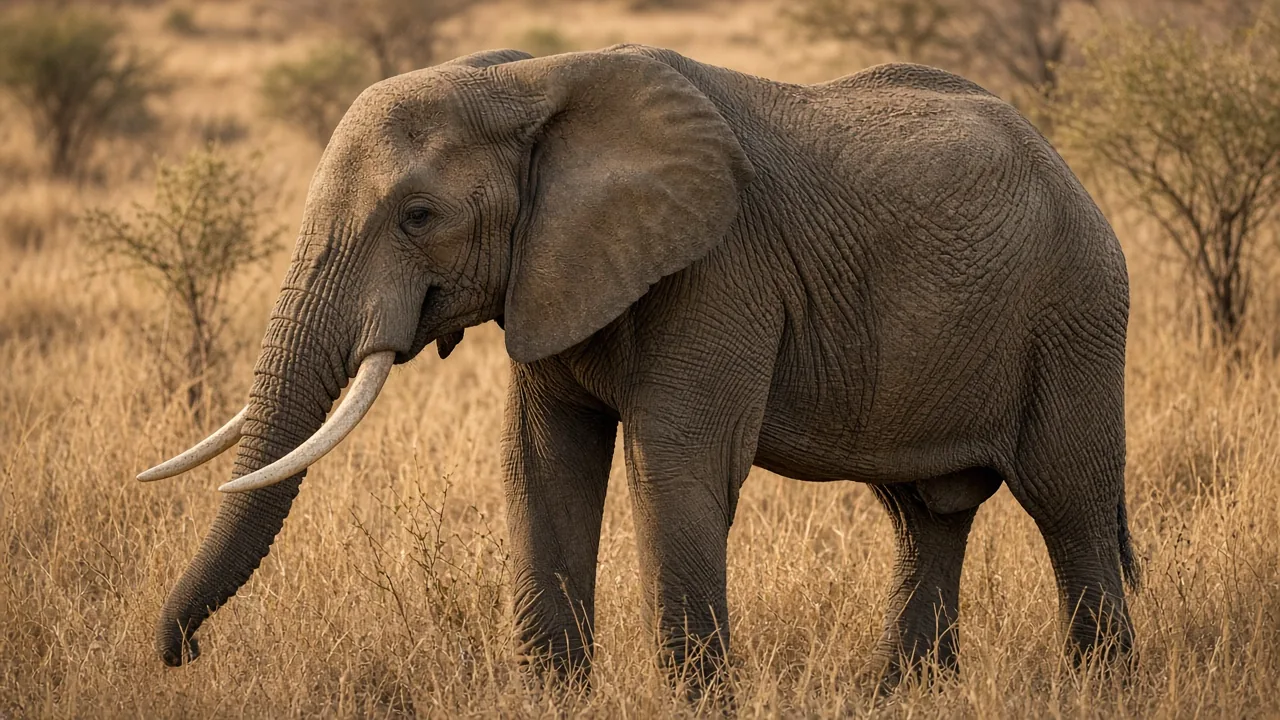
What musth looks like
The San Diego Zoo Wildlife Alliance Library describes musth as a unique sexual state in breeding male elephants, a period of heightened sexual activity and aggressive behavior. It has been compared to the rut in deer. The physical signs are distinctive:
- The temporal glands, between each eye and ear, swell and secrete a dark, oily liquid that runs down the face.
- The bull dribbles urine between his hind legs.
- Extra sex pheromones are present in his breath, and he has a pungent body odor.
Behavior changes too. Musth bulls roam more widely, spend more time with females and guard females that are ready to breed, give frequent displays such as ear waving, and make a low, pulsing call known as the musth rumble.
The hormones behind it
Musth is driven by androgens, mainly testosterone. The San Diego Zoo Wildlife Alliance fact sheet for Asian elephants says testosterone can rise up to 20 times above non musth levels. In a 1984 study in Biology of Reproduction, Rasmussen and colleagues measured serum testosterone of 19 to 40 ng/ml in Asian bulls in musth, the highest androgen values in their study. They also found that in Asian males the temporal gland secreted only during musth, which suggests the fluid plays a role in communication.
A long term study of four zoo housed Asian bulls, published in Animals in 2022 by Glaeser and colleagues, found that every bull had regular yearly musth cycles. Cortisol rose and fell with testosterone, and testosterone declined with age in mature bulls.
Why bulls go into musth
According to the San Diego Zoo Wildlife Alliance Library, musth does several jobs:
- It lets males, especially older ones, enter family groups led by females.
- It signals to females that a bull is ready to breed, which helps females choose a mate.
- It reduces dominance fights among adult males. Bulls can read each other's status from scent and sound, which often makes physical combat unnecessary and helps prevent injury and death.
Females in estrus tend to prefer large males in musth. In savanna elephants, bulls aged about 45 to 50 are the most successful at fathering calves. A bull does not have to be in musth to mate, but musth bulls dominate the opportunities.
When it happens and how long it lasts
For African savanna elephants, the fact sheet says musth can occur at any time of year across a population, but each bull tends to come into musth at about the same time every year. Most males have their first musth by about 25 to 30 years old. Musth usually lasts 4 to 8 weeks in bulls aged 36 to 40 and up to 10 weeks in bulls aged 46 to 50. Smaller, low ranking males may come into musth only in short, sporadic bouts.
For Asian elephants, the fact sheet gives musth periods of about four months. Wild Asian bulls can enter musth as early as 14 or 15 but it is more common after 20, and its intensity and length generally increase after about 25. Zoo bulls have been seen in musth as young as 11, perhaps because of rich diets or a lack of rival males.
A costly state
Musth takes a toll. The fact sheets note that most African bulls lose weight during musth because of the extra activity, and that Asian bulls in musth often eat less. Musth bulls confront, chase and sometimes fight other males, and fights between bulls in musth are listed among the causes of injury and death in both species.
Is musth the same in African and Asian elephants?
Broadly yes, but not in every detail. The San Diego Zoo Wildlife Alliance fact sheet for Asian elephants notes that a 2022 study by LaDue and colleagues did not find higher aggression or vocalization in wild and zoo housed Asian bulls in musth, which may differ from African elephants. Forest elephants are much less studied, and the fact sheet says more research is needed.
Staying safe around bulls
Because aggression is often linked with musth, it raises safety and welfare concerns in managed care, as Glaeser and colleagues note. In the wild, a dark streak running from the temple to the jaw and a constant dribble of urine are visible signs. Always keep a wide distance from any elephant and follow your guide; see our ethical viewing guide.
Frequently asked questions
What does musth mean?
It is the name for a periodic sexual state in adult bull elephants, marked by high testosterone, temporal gland secretions, urine dribbling and changes in behavior.
Do female elephants go into musth?
No. Musth is a state of breeding age males. Females have an estrus cycle instead.
How long does musth last?
San Diego Zoo Wildlife Alliance fact sheets give about 4 to 8 weeks in African bulls aged 36 to 40, up to about 10 weeks in bulls aged 46 to 50, and about 4 months in Asian bulls.
Is an elephant in musth dangerous?
Musth bulls are often more aggressive and unpredictable, which is a known safety concern. Always keep a large distance from any wild elephant and follow guides and rangers.
Can a bull mate without being in musth?
Yes. Males can breed at any time, but large bulls in musth tend to dominate mating and females often prefer them.
Sources
- San Diego Zoo Wildlife Alliance Library: African elephants fact sheet, reproduction and development
- San Diego Zoo Wildlife Alliance Library: Asian elephant fact sheet, reproduction and development
- Rasmussen, L. E., Buss, I. O., Hess, D. L., Schmidt, M. J. (1984). Testosterone and dihydrotestosterone concentrations in elephant serum and temporal gland secretions. Biology of Reproduction 30(2): 352 to 362. doi:10.1095/biolreprod30.2.352
- Glaeser, S. S., Edwards, K. L., Paris, S., et al. (2022). Characterization of longitudinal testosterone, cortisol, and musth in male Asian elephants (Elephas maximus). Animals 12(10): 1332. doi:10.3390/ani12101332
Cite this page
APA
TuskWise. (2026, November 12). What is musth in elephants? https://tuskwise.com/blog/what-is-musth-in-elephants.html
MLA
“What is musth in elephants?” TuskWise, 12 Nov. 2026, tuskwise.com/blog/what-is-musth-in-elephants.html.
Chicago
TuskWise. “What is musth in elephants?” TuskWise. Last modified November 12, 2026. https://tuskwise.com/blog/what-is-musth-in-elephants.html.